
Compressed air supplies the transport force, but stable insertion is a timed yarn-handling process. Yarn package condition, withdrawal tension, nozzle alignment, air quality, shed clarity and detection all affect the same flight.
YARN PREPARATION
Measure the pick before it enters the shed
The weft feeder or accumulator prepares the required length and controls withdrawal from the package. The stopper releases the yarn at the programmed moment. Uneven packages, excessive braking, rough guides or unstable withdrawal tension can disturb the pick before the air system has a chance to guide it.
MAIN AND RELAY NOZZLES
Build one continuous transport sequence
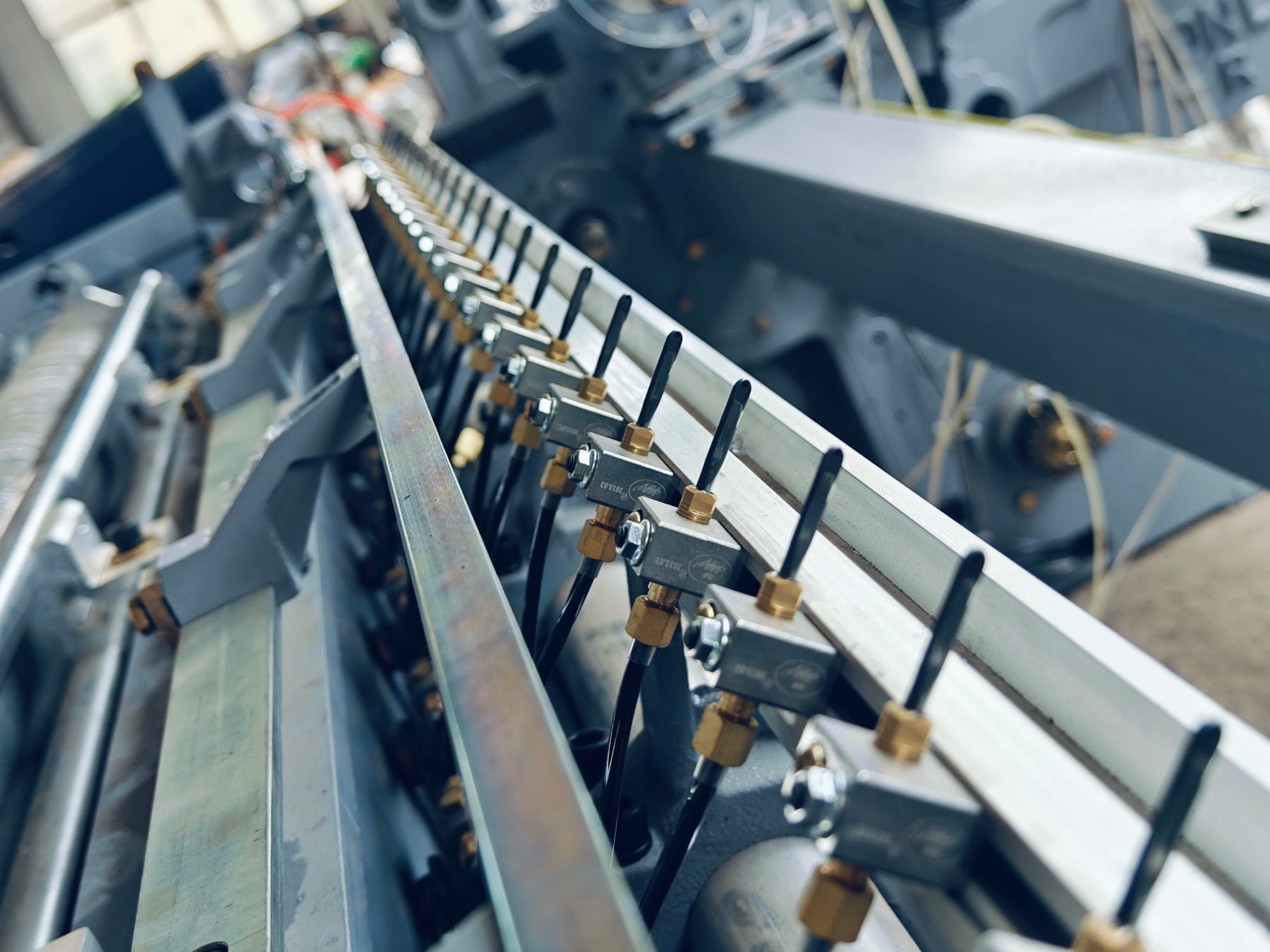
The main nozzle gives the yarn its initial acceleration. Relay nozzles then provide staged support as the yarn crosses the width. Their alignment, opening sequence and overlap should follow the actual yarn flight; a weak handover can produce late arrival, while excessive or badly timed air can increase consumption and disturb the yarn.
- Confirm nozzle position and direction
- Check valves, tubes and joints for leakage
- Match relay groups to the actual flight path
- Change one setting at a time and observe arrival stability
PROFILED REED AND SHED
Keep the guided path clean and open
The profiled reed helps contain and direct the air stream while the open shed keeps warp yarns clear of the flying pick. Reed contamination, damaged dents, incorrect nozzle height, warp hairiness or unclear shedding can interrupt the flow and create location-specific insertion faults.
ARRIVAL CONTROL
Use detection and air demand as verification
The receiving-side detector confirms whether the pick arrives within the allowed timing window. Repeated early, late or missing signals should be checked against the yarn path, air supply, nozzle sequence and shed condition. Stable arrival with the lowest reliable air demand is a better objective than simply increasing pressure.
Review the complete weft path for your fabric
Share the weft yarn, reed space, fabric construction and expected production conditions. JETMECH can review the feeder, nozzle layout and detection requirements with the final machine configuration.